Marble street in Mandalay
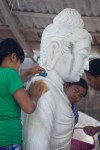
Mandalay has a reputation for its incredible marble carvers. Their skill has been passed down for generations. Along marble street you will find workshops lining the street where Buddha statues of all sizes are carved out of the finest white marble. The marble is mined in quarries not far from Mandalay. A cloud of fine dust lingers over the area, so I used my camera raincover for dust protection. And don’t even think about changing lenses there! Men seem to do most of the carving work, women do the finishing (polishing), after which the statues are painted and decorated with gold leaf. Before an important piece of work will get carved an astrologer will get consulted to pick an auspicious day, the stone will be blessed with holy water and offerings will be made.
Click on any image to see a larger version.
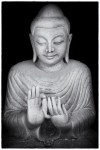
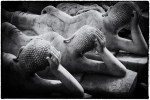

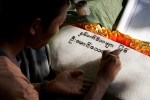
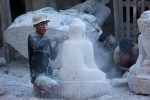
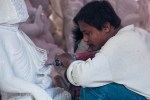
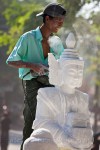
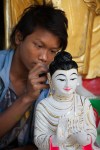
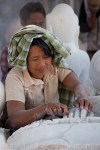
You can find more Myanmar images on my website.
The meaning of the lotus flower
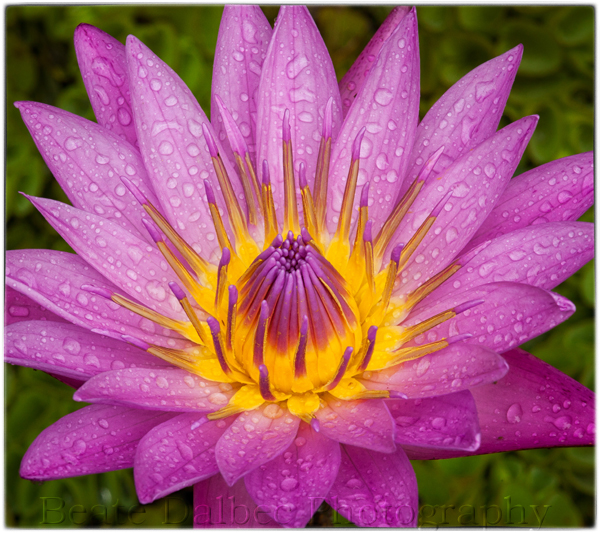
Have you ever wondered about the meaning of the lotus flower? We all know it has significance in Buddhism, but what exactly is it? I had taken this picture of a pink lotus in a pond in Bagan, so I thought I do some research.
The lotus grows in murky water and the flower makes its journey from the mud, through the water into the sunshine where it blossoms. The mud represents the fact that all humans are born into a world of suffering, which is a vital part of the human experience. Rising above this murky water the blossoming flower represents enlightenment. It is a metaphor for the journey of the soul.
The color of the lotus also has significance:
white – represents mental purity and spiritual perfection
red – represents love, purity of heart and compassion
blue – represents wisdom
pink – the supreme lotus associated with the Great Buddha
Mastering star trail photography by Jim Goldstein
Are you interested in learning about star trail photography? Then you might want to check out Jim Goldstein’s 4 day online class starting on March 26th. You can sign up for the FREE live webinar and also purchase the video by following this link.

Jim will cover everything you will need to know starting with what gear to use, the shoot itself, post-production, including blending, stacking and masking. If you purchase the video, Jim will also include his fabulous eBook “Photographing the 4th Dimension – Time” for free.
The video will be available for pre-purchase at a 25% discount for $ 74.00. Starting March 26th it will be available for $ 99.99. Those who pre-purchase the video by March 25th will also be entered to win a free copy of Adobe Photoshop Extended (a $999 value!).
“Forget mugshots” by David duChemin
David duChemin has just released a great new eBook titled “Forget mugshots – 10 steps to better portraits”.
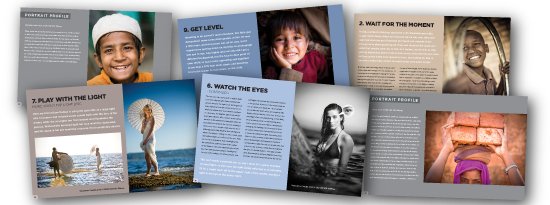
Portrait photography is an art in itself. It does not only require photography skills but also great people skills. All the technical know-how in the world is not going to give you a great portrait, if the person you are photographing does not feel comfortable around you. In this eBook David duChemin provides 10 excellent creative excercises to help you get better portraits.
You can purchase the eBook by clicking on this link.
Special Offer on PDFs For the next five days only, use the promotional code MUGSHOTS4 when you checkout so you can have the PDF version of Forget Mugshots for only $4 OR use the code MUGSHOTS20 to get 20% off when you buy 5+ PDF eBooks from the Craft & Vision collection. These codes expire at 11:59pm PST March 17, 2012.
An evening at the U Bein bridge
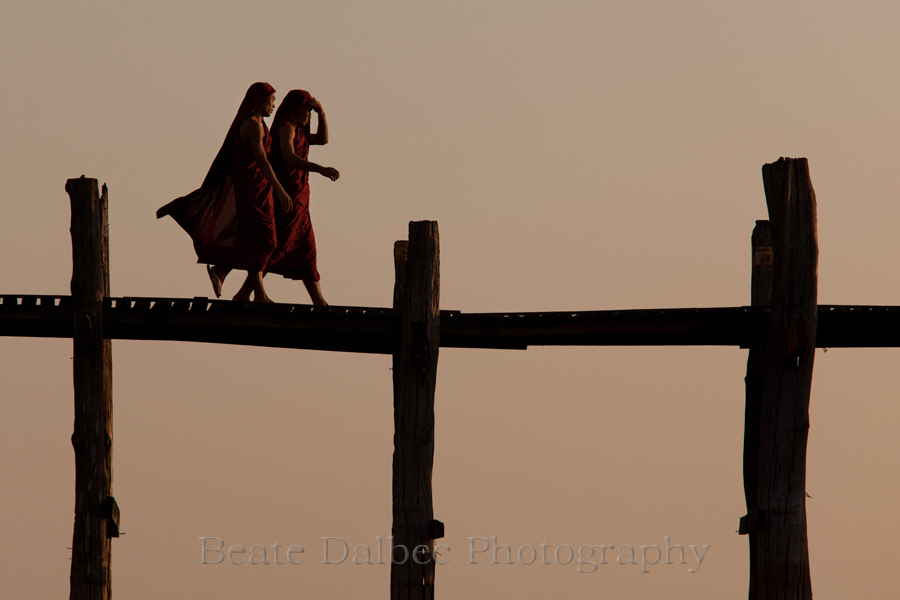
The U bein bridge in Amarapura, near Mandalay, is one of the must-see locations in Myanmar. It leads across the shallow Taungthaman lake and is the longest teak bridge in the world, spanning 1.2 km. After 200 years it is still standing strong! The best time to visit is at sunset when you can photograph silhouettes of people crossing the bridge. That sounds easier than it is, since quite often there a large groups of people in one big clump (NOT an attractive silhouette). I found that for an effective image you want just a few individuals that will provide you with a nice graphic shot. Here are the two shots that I liked the best from my visit. (you can click on the image to see a larger version)
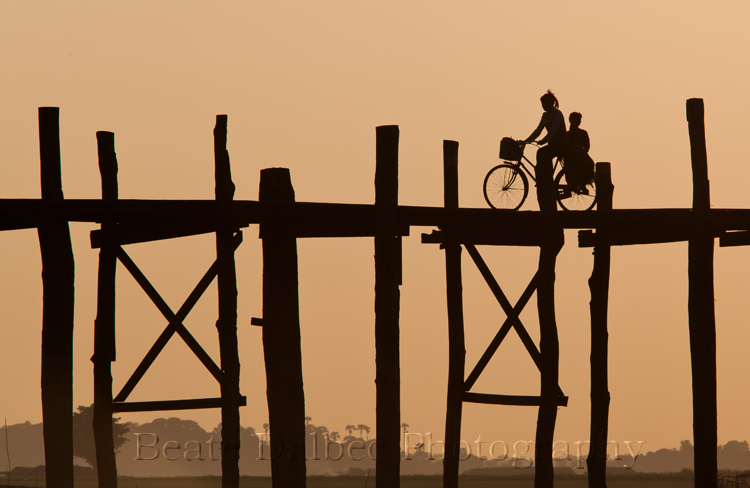
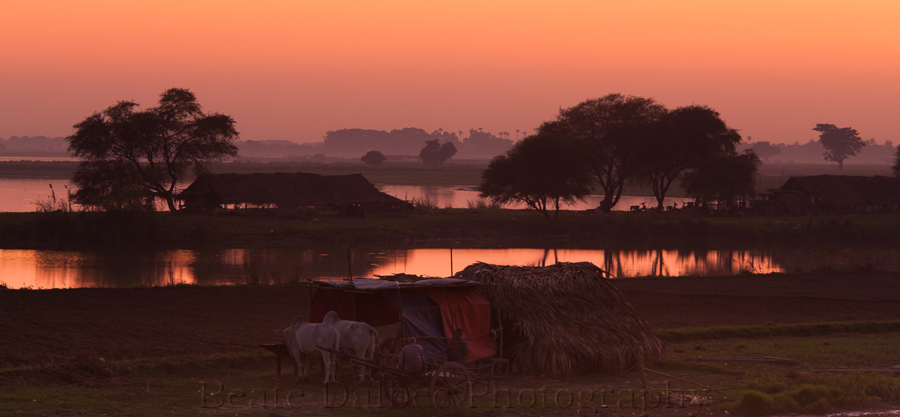
Walking back across the bridge after sunset I noticed this farmer who had just returned from plowing the field with his oxen. There was barely enough light for this shot. Setting up my tripod on the wooden bridge was another problem. I needed a fairly long exposure and every time I pressed the shutter someone would start walking down the bridge and my tripod started to vibrate too much for a sharp shot. But one worked!
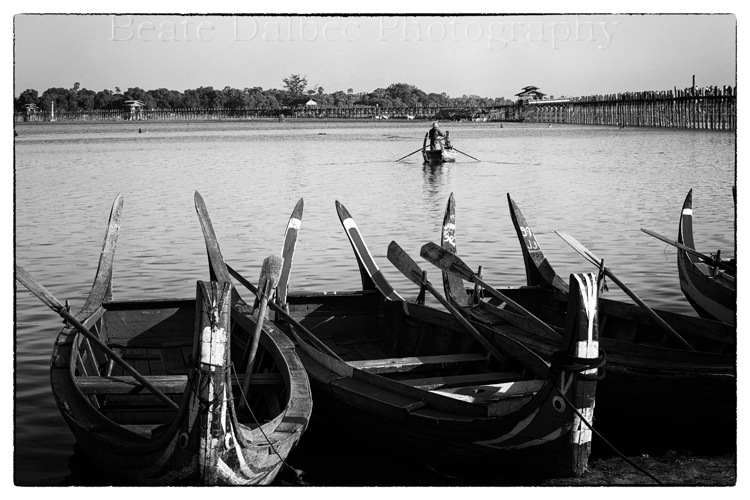
And for something a little different, here is one in monochrome, taken before heading out to our sunset shoot.
As usual, you can find more images of my trip to Myanmar on my website.
“Children of the world” medal
I had already previously posted about my trip to a monastery in Yangon, where I was able to photography young monks studying, but had left out one picture in that post, which I am happy to share now.
I must admit I was absolutely thrilled when I received a notifcation that my image of the young monk in Yangon won the “children of the world” medal at the Greater Lynn International salon. Still pinching myself!

Sand painter in Bagan
One artform that you will find mainly in the Bagan area is sand painting. Not having traditional canvas available, artists spread an acrylic glue on cloth and sprinkle fine sand on it. Once it is dry it is ready to be painted. Even so some artist are starting to paint their own designs, a lot of paintings are copies of murals found throughout the temples, most notably the Gubyaukgyi temple dating from the 12th century. This particular temple has some of the most well preserved murals in Bagan. In a preservation effort the Department of Archaeology has banned photography and especially making carbon copies of these murals, but local artists took advantage of the chaos after the earthquake in 1975 to gain access to the temple and copy some of the murals.
A sand painter at work

The detail in the paintings is incredible

A young monk watching an artist at work

Sand paintings for sale

More images from Myanmar can be found on my website.
The ancient city of Bagan
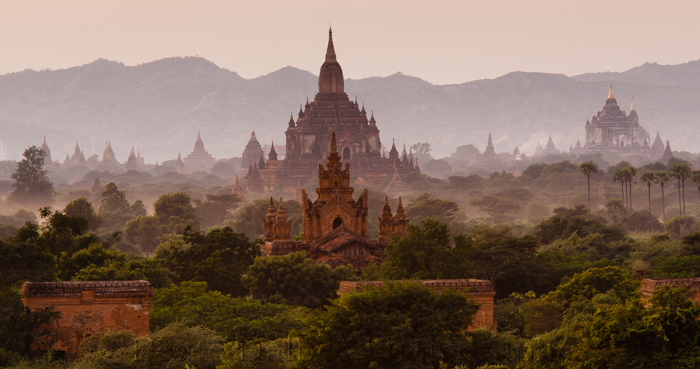
Bagan was the capital of several ancient burmese kingdoms and spreads out over an area of 16 square miles. Most of the buildings were constructed during the 11th – 13th century, during which Bagan was the capital of the First Burmese Empire. The earthquake in 1975 destroyed about half of the 5000 pagodas and temples, most of which are in various stages of decay. Some of them have been reconstructed since.
Watching the sunrise or sunset from the top of one of the pagodas is an incredible experience.
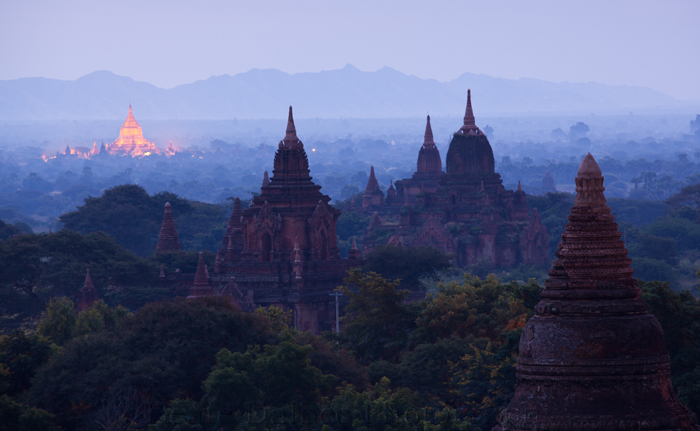
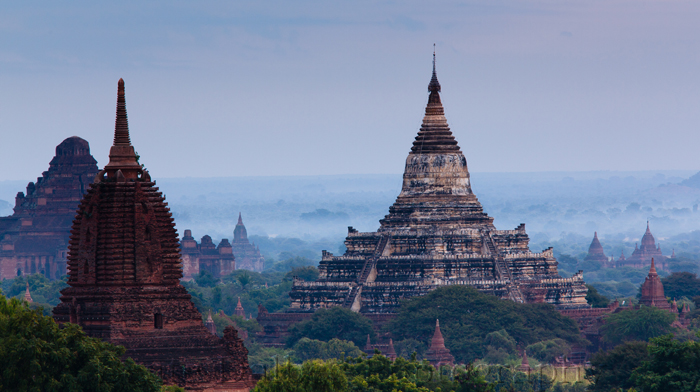
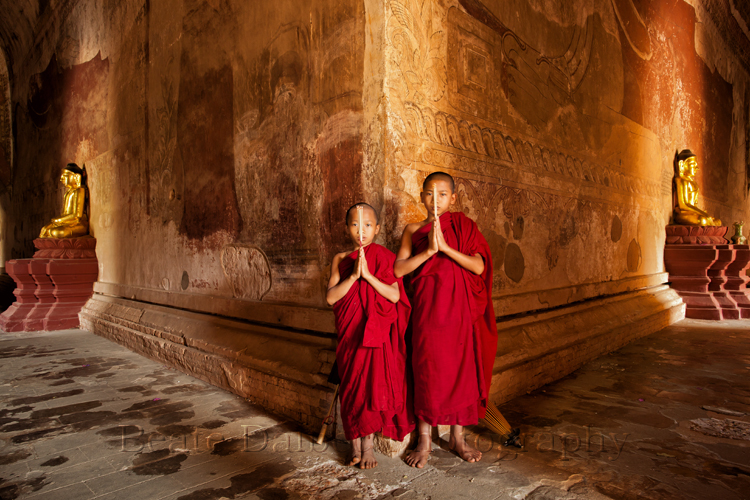
The interior of some of the pagodas are covered with beautiful murals. This is inside the Sulamani pagoda.
The Shinbinthalyaung temple is a rather unassuming vaulted brick structure from the 11th century that houses an 18m long reclining Buddha statue.

You can find more images of Bagan on my website by clicking here.
Young monks in Yangon
Every Myanmar male is expected to take up monastic residence twice in his life – once between age 10 and 20 and then again after age 20. Monasteries are also a place for poor families to send their children to receive a free education.
We walked into this monastery in Yangon as the young monks were studying. The room was only lit up by some sunlight shining through the cracks of the door and partially closed windows. What wonderful light. It required a fairly long exposure, but fortunately these young monks were supposed to be studying and sat fairly quiet (but I think we provided a welcomed distraction 🙂 ).
(click on any image to see a larger version)


For more images from my trip to Myanmar, please check out my website.
A visit to the Shwedagon Pagoda – Yangon
What better place to start my series of posts about my trip to Myanmar than my visit to the Shwedagon pagoda in Yangon. Or rather visits – we visited twice, once at the beginning of the trip and once more at the end. The Shwedagon pagoda can only be described as aw-inspiring gorgeous. It is quite overwhelming and you can spend a lot of time just absorbing these stunning surroundings, never mind photographing them. The original site has existed for over 2500 years, but has undergone many modifications during this period. It was built to house 8 strands of hair of the Gautama Buddha and is therefore the most sacred buddhist site in Myanmar. But I will not go into detail about the history and all the architectural features, you can read up on that (and other useful information) here.
Our second visit coincided with the evening of the full moon. Worshipers light candles all around the pagoda. An incredible sight. One of my traveling companions and I were sitting on the floor absorbing the atmosphere, when we heard chanting. A group of young nuns had sat down next to us. Their voices were just beautiful. Goosebumps!
If you should ever go – plan on spending a lot of time there! It is a rather large complex and you definitely want some time to just sit down and watch as people walk by, pray, present their offerings. Despite the amount of people there, the atmosphere is quite calming. Everything is kept immaculately clean by groups of sweepers that seem to almost constantly walk around the pagoda, which is good since you have to be barefoot (like in any other temple in Myanmar).
Click on any thumbnail for a larger version of the image.
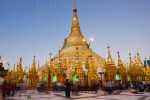
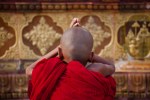

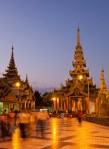
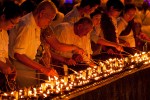
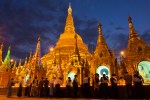
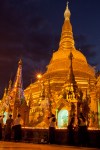
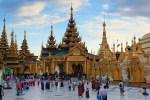
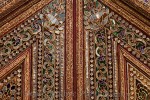
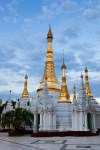

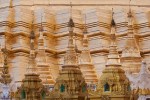
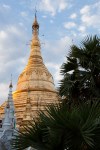

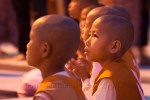
You can find more images from my trip on my website at Beate Dalbec Photography
Just a little side note for other travellers: On our first visit I ended up getting quite sick – I guess something I ate for lunch did not agree with me (this was the ONLY time and the food everywhere was delicious!!!). Fortunately I had some Pepto-Bismol in my camera bag which I took right away. I felt absolutely miserable for about half an hour but then was well enough to continue. I am only mentioning this, because several people commented afterward that they never would have thought about having it along in the camera bag. It won’t do you much good in the hotel room. If I would not have had it with me I would have spent the evening in a much less attractive place than the pagoda 🙂
 Beate Dalbec's Blog